About Beryllium

Beryllium-containing minerals have been known by humans since at least the Ptolemaic dynasty of Egypt, where some were recognized as gemstones. The first chemical analysis that succeeding in distinguishing a common beryllium mineral, beryl, from other aluminum silicates was completed in 1789 by the chemist Louis Vauquelin, to whom credit is given for the discovery of this element. Editors of the journal in which he published his findings favored the name “glucine” for the element due to the sweet taste of some of its compounds. However, the name suggested by Friedrich Wohler, who became the first to isolate pure metallic beryllium in 1828, was the one that ultimately became official.
Beryllium is an extremely lightweight metal that is brittle at room temperature but also extremely hard. Occupying the fourth spot on the periodic table, beryllium heads the alkaline earth group of metals that includes calcium and magnesium and is the lightest of all metals except for lithium. High thermal conductivity, heat capacity, and melting point (the highest of the so-called “light metals”) make beryllium a useful industrial metal, especially because its alloys are tough, stiff, and lightweight. Beryllium-copper in particular (also known as beryllium bronze) conducts electricity and heat almost as well as pure copper but is harder, stronger, and more corrosion-resistant than other copper-based alloys. Beryllium-copper has been used in multiple capacities ranging from electrical contacts in high-performance circuit boards, automobile and aircraft parts, oil and gas drilling equipment, and radar systems. It also has the unusual ability to be struck without giving off sparks, making it useful in tools and equipment in high-temperature, explosive environments such as rocket manufacturing facilities. Other alloys include nickel-beryllium, a high-strength precipitation hardenable alloy, and aluminum-beryllium, three times as stiff and twenty-five times lighter than aluminum, used in helicopters and satellite guidance systems.
Outside of use as an alloying agent, beryllium is primarily valued for its nuclear and electronic properties. Due to its low atomic mass and density, beryllium is largely transparent to X-rays and remains stable under neutron bombardment. It is frequently used as a window or coating for x-ray tubes, and ultrathin beryllium foil is used in x-ray lithography. It also has various functions in the production of nuclear fuels and the construction of nuclear reactors. In electronic devices, beryllium serves as a p-type dopant in III-V compound semiconductors, and can also be used as both a structural support and heat sink for printed circuit boards. Frequently, a composite of beryllium and beryllium oxide is used for this purpose.
Beryllium oxide is a particularly notable as a compound as it is both an electrical insulator and a good thermal conductor, and additionally exhibits strength, hardness, and a high melting point. These properties lend it to a variety of uses as a refractory ceramic primarily as sintered crucibles, bricks, and heat sinks in many electronics.
Beryllium and its compounds are toxic when ingested, as the element can substitute for its neighbor on the periodic table, magnesium, in essential enzymes, causing dysfunction. However, beryllium is poorly absorbed through the skin and the digestive tract, so beryllium poisoning by those routes is rare. The largest real safety concern with beryllium is inhalation of dust containing the element. The dust is an irritant, and can cause either acute lung ailments or a chronic lung disease called berylliosis, depending on the dose and time course of exposure. Acute overexposure is relatively rare, but chronic beryllium disease is a major health concern, as even very low levels can cause significant harm after years of exposure. Current guidelines suggest keeping airborne beryllium exposure to “the lowest feasible level” at all times. Beryllium was once widely used in the production of fluorescent lighting, but this use has been discontinued as the exposure of workers to beryllium was too high.
Beryllium is not found in large quantities as a free element, but is a component of many naturally occurring minerals. These minerals occur only rarely in significant exploitable deposits, and both this and the expense of extracting the element from ore contribute to its high cost. The primary ores for the element are bertrandite, which is a beryllium sorosilicate hydroxide mineral, and beryl, an aluminum beryllium cyclosilicate. Some high-quality samples of beryl that contain impurities that produce attractive colors are considered precious stones; these include aquamarine, red beryl, and emerald.
Beryllium’s high affinity for oxygen at high temperatures, along with its ability to reduce water, make it difficult to extract from its mineral forms. There are two processes currently in use to accomplish this: in the melt method, beryl is ground into a powder and heated to 3000 °F. It is then cooled and reheated with acid, producing beryllium sulfate, and treated with ammonia to produce beryllium hydroxide. In the sintering method, beryl is sintered at 1420F with sodium fluorosilicate and soda, producing sodium fluoroberyllate. This product is water soluble, and adding sodium hydroxide to a solution of fluoroberyllate produces beryllium hydroxide. Beryllium hydroxide obtained by either method can be converted to either beryllium fluoride or beryllium chloride, which may be used directly or converted to pure beryllium metal.
Due to the complexity of this process, recycling beryllium alloys and scrap is substantially more energy efficient than producing new metal from ore. It is estimated that currently 20-25% of beryllium used annually is recycled, and the introduction of new recycling programs in recent years suggests that this number may rise in the near future.
Products
Beryllium is a fairly soft metal that is brittle yet strong. It is used as a coating on X-ray tubes because it is transparent to the X-ray range. It also has military and nuclear industry applications.  Beryllium is available as metal and compounds with purities from 99% to 99.999% (ACS grade to ultra-high purity).
  Elemental or metallic forms include pellets, rod, wire and granules for evaporation source material purposes. Beryllium oxide is an insoluble source of beryllium available in powder and dense pellet form for such uses as optical coating and thin film applications. Beryllium fluoride is another insoluble form for uses in which oxygen is undesirable such as metallurgy, chemical and physical vapor deposition and in some optical coatings. Beryllium is also available in soluble forms including chlorides, nitrates and acetates. These compounds can be manufactured as solutions at specified stoichiometries.
Beryllium Properties
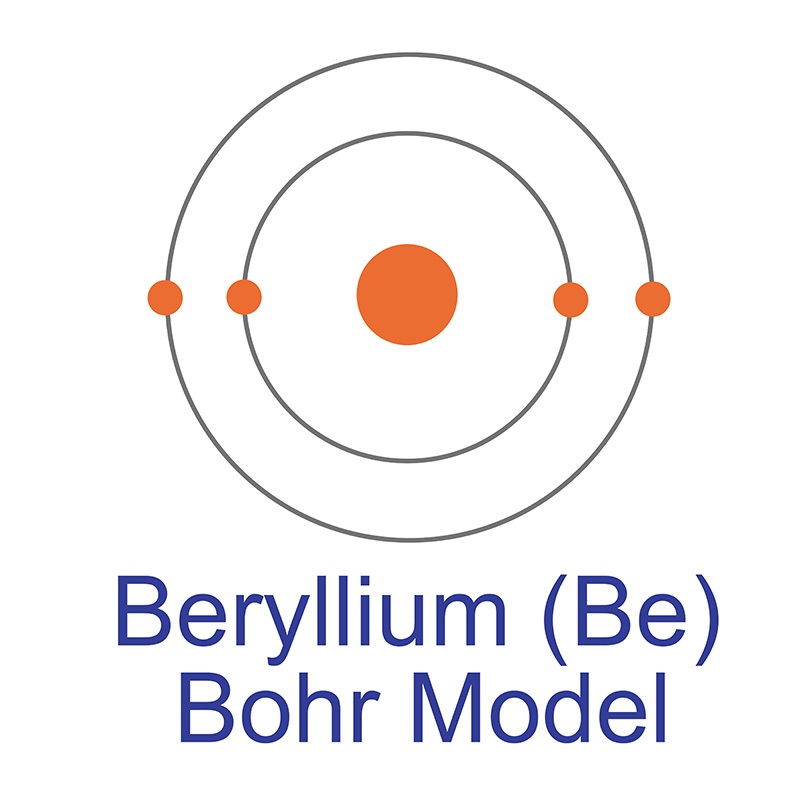
 Beryllium is a Block S, Group 2, Period 2 element. The number of electrons in each of Beryllium's shells is 2, 2 and its electron configuration is [He] 2s2.
  The most common source for commercial production of Beryllium is beryl, a barium aluminosilicate mineral. Beryllium is also found in bertrandite (Be4Si2O7(OH)2), chrysoberyl (Al2BeO4) and phenakite (Be2SiO4). Beryllium was discovered by Louis Nicolas Vauquelin in 1797. It was first isolated by Friedrich Wöhler & Antoine Bussy in 1828. The origin of the name Beryllium comes from the Greek word 'beryllos' meaning beryl.
Health, Safety & Transportation Information for Beryllium
Beryllium and its salts are toxic as well as carcinogenic. Safety data for Beryllium and its compounds can vary widely depending on the form. For potential hazard information, toxicity, and road, sea and air transportation limitations, such as DOT Hazard Class, DOT Number, EU Number, NFPA Health rating and RTECS Class, please see the specific material or compound referenced in the Products tab.
| Safety Data | |
|---|---|
| Signal Word | Danger |
| Hazard Statements | H301-H315-H317-H319-H330-H335-H350i-H372 |
| Hazard Codes | T+ |
| Risk Codes | 49-25-26-36/37/38-43-48/23 |
| Safety Precautions | 53-45 |
| RTECS Number | DS1750000 |
| Transport Information | UN 1567 6.1/PG 2 |
| WGK Germany | 3 |
| Globally Harmonized System of Classification and Labelling (GHS) |

 |
SECTION 1. IDENTIFICATION
Product Name: Beryllium Metal
Product Number: All applicable American Elements product codes, e.g. BE-M-02, BE-M-03, BE-M-04, BE-M-05
CAS #: 7440-41-7
Relevant identified uses of the substance: Scientific research and development
Supplier details:
American Elements
1093 Broxton Ave. Suite 2000
Los Angeles, CA 90024
Tel: +1 310-208-0551
Fax: +1 310-208-0351
Emergency telephone number:
Domestic, North America +1 800-424-9300
International +1 703-527-3887
SECTION 2. HAZARDS IDENTIFICATION
Classification of the substance or mixture
Classification according to Regulation (EC) No 1272/2008
GHS06 Skull and crossbones
Acute Tox. 3 H301 Toxic if swallowed.
Acute Tox. 2 H330 Fatal if inhaled.
GHS08 Health hazard
Carc. 1B H350 May cause cancer.
STOT RE 1 H372 Causes damage to the lung and the blood through prolonged or repeated exposure. Route of exposure: Inhalative.
GHS07
Skin Irrit. 2 H315 Causes skin irritation.
Eye Irrit. 2 H319 Causes serious eye irritation.
Skin Sens. 1 H317 May cause an allergic skin reaction.
STOT SE 3 H335 May cause respiratory irritation.
Classification according to Directive 67/548/EEC or Directive 1999/45/EC
T+; Very toxic
R26: Very toxic by inhalation.
T; Toxic
R49-25-48/23: May cause cancer by inhalation. Toxic if swallowed. Toxic: danger of serious damage to health by prolonged exposure through inhalation.
Xi; Irritant
R36/37/38: Irritating to eyes, respiratory system and skin.
Xi; Sensitizing
R43: May cause sensitization by skin contact.
Carc. Cat. 2
Information concerning particular hazards for human and environment:
Not applicable
Hazards not otherwise classified
No information known.
Label elements
Labelling according to Regulation (EC) No 1272/2008
The substance is classified and labeled according to the CLP regulation.
Hazard pictograms

GHS06 GHS08
Signal word: Danger
Hazard statements
H301 Toxic if swallowed.
H330 Fatal if inhaled.
H315 Causes skin irritation.
H319 Causes serious eye irritation.
H317 May cause an allergic skin reaction.
H350 May cause cancer.
H335 May cause respiratory irritation.
H372 Causes damage to the lung and the blood through prolonged or repeated exposure. Route of exposure: Inhalative.
Precautionary statements
P260 Do not breathe dust/fume/gas/mist/vapours/spray.
P301+P310 IF SWALLOWED: Immediately call a POISON CENTER/ doctor/...
P305+P351+P338 IF IN EYES: Rinse cautiously with water for several minutes. Remove contact lenses, if present and easy to do. Continue rinsing.
P320 Specific treatment is urgent (see on this label).
P405 Store locked up.
P501 Dispose of contents/container in accordance with local/regional/national/international regulations.
WHMIS classification
D1A - Very toxic material causing immediate and serious toxic effects
D2A - Very toxic material causing other toxic effects
Classification system
HMIS ratings (scale 0-4)
(Hazardous Materials Identification System)
HEALTH
FIRE
REACTIVITY
1
0
0
Health (acute effects) = 1
Flammability = 0
Physical Hazard = 0
Other hazards
Results of PBT and vPvB assessment
PBT: Not applicable.
vPvB: Not applicable.
SECTION 3. COMPOSITION/INFORMATION ON INGREDIENTS
Chemical characterization: Substances
CAS# Description:
7440-41-7 Beryllium
Identification number(s):
EC number: 231-150-7
Index number: 004-001-00-7
SECTION 4. FIRST AID MEASURES
Description of first aid measures
General information
Immediately remove any clothing soiled by the product.
Remove breathing apparatus only after contaminated clothing has been completely removed.
In case of irregular breathing or respiratory arrest provide artificial respiration.
No special measures required.
After inhalation
Seek medical treatment in case of complaints.
After skin contact
Generally the product does not irritate the skin.
After eye contact
Rinse opened eye for several minutes under running water. If symptoms persist, consult a doctor.
After swallowing
Do not induce vomiting; immediately call for medical help.
Information for doctor
Most important symptoms and effects, both acute and delayed
No further relevant information available.
Indication of any immediate medical attention and special treatment needed
No further relevant information available.
SECTION 5. FIREFIGHTING MEASURES
Extinguishing media
Suitable extinguishing agents
Special powder for metal fires. Do not use water.
For safety reasons unsuitable extinguishing agents
Water
Special hazards arising from the substance or mixture
If this product is involved in a fire, the following can be released:
Toxic metal oxide fume
Advice for firefighters
Protective equipment:
No special measures required.
SECTION 6. ACCIDENTAL RELEASE MEASURES
Personal precautions, protective equipment and emergency procedures
Not required.
Environmental precautions:
Do not allow material to be released to the environment without proper governmental permits.
Do not allow product to reach sewage system or any water course.
Do not allow to penetrate the ground/soil.
Methods and material for containment and cleaning up:
Dispose of contaminated material as waste according to section 13.
Ensure adequate ventilation.
Prevention of secondary hazards:
No special measures required.
Reference to other sections
See Section 7 for information on safe handling
See Section 8 for information on personal protection equipment.
See Section 13 for disposal information.
SECTION 7. HANDLING AND STORAGE
Handling
Precautions for safe handling
Keep container tightly sealed.
Store in cool, dry place in tightly closed containers.
Ensure good ventilation at the workplace.
Open and handle container with care.
Information about protection against explosions and fires:
No special measures required.
Conditions for safe storage, including any incompatibilities
Storage
Requirements to be met by storerooms and receptacles:
No special requirements.
Information about storage in one common storage facility:
Do not store together with acids.
Store away from strong bases.
Further information about storage conditions:
Keep container tightly sealed.
Store in cool, dry conditions in well sealed containers.
Specific end use(s)
No further relevant information available
SECTION 8. EXPOSURE CONTROLS/PERSONAL PROTECTION
Additional information about design of technical systems:
No further data; see section 7.
Control parameters
Components with limit values that require monitoring at the workplace:
7440-41-7 Beryllium (100.0%)
PEL (USA) Long-term value: 0.002 mg/m³
Ceiling limit value: 0.005; 0.025* mg/m³ as Be; *30 min peak per 8-hr shift
REL (USA) Ceiling limit value: 0.0005 mg/m³ as Be; See Pocket Guide App. A
TLV (USA) Long-term value: 0.00005* mg/m³ as Be;*inhalable; (SEN)NIC-DSEN;RSEN;Skin
EL (Canada) Long-term value: 0.002 mg/m³ as Be; ACIGH A1, IARC 1
EV (Canada) Short-term value: 0.01 mg/m³
Long-term value: 0.002 mg/m³ as Be
Additional information: No data
Exposure controls
Personal protective equipment
General protective and hygienic measures
The usual precautionary measures for handling chemicals should be followed.
Store protective clothing separately.
Avoid contact with the eyes and skin.
Maintain an ergonomically appropriate working environment.
Breathing equipment:
Not required.
Use self-contained respiratory protective device in emergency situations.
Protection of hands: Not required.
Penetration time of glove material (in minutes): Not determined
Eye protection: Safety glasses
Body protection: Protective work clothing.
SECTION 9. PHYSICAL AND CHEMICAL PROPERTIES
Information on basic physical and chemical properties
General Information
Appearance:
Form: Solid in various forms
Color: Grey
Odor: Odorless
Odor threshold: Not determined.
pH-value: Not applicable.
Change in condition
Melting point/Melting range: 1278 °C (2332 °F)
Boiling point/Boiling range: 2471 °C (4480 °F)
Sublimation temperature / start: Not determined
Flammability (solid, gaseous): Not determined.
Ignition temperature: Not determined
Decomposition temperature: Not determined
Auto igniting: Not determined.
Danger of explosion: Not determined.
Explosion limits:
Lower: Not determined
Upper: Not determined
Vapor pressure at 990 °C (1814 °F): 0.000133 hPa
Density at 20 °C (68 °F): 1.848 g/cm³ (15.422 lbs/gal)
Relative density: Not determined.
Vapor density: Not applicable.
Evaporation rate: Not applicable.
Solubility in / Miscibility with Water: Insoluble
Partition coefficient (n-octanol/water): Not determined.
Viscosity:
dynamic: Not applicable.
kinematic: Not applicable.
Other information
No further relevant information available
SECTION 10. STABILITY AND REACTIVITY
Reactivity
No information known.
Chemical stability
Stable under recommended storage conditions.
Thermal decomposition / conditions to be avoided:
Decomposition will not occur if used and stored according to specifications.
Possibility of hazardous reactions
No dangerous reactions known
Conditions to avoid
No further relevant information available.
Incompatible materials:
Acids
Bases
Hazardous decomposition products:
Toxic metal oxide fume
SECTION 11. TOXICOLOGICAL INFORMATION
Information on toxicological effects
Acute toxicity:
Fatal if inhaled.
Toxic if swallowed.
The Registry of Toxic Effects of Chemical Substances (RTECS) contains acute toxicity data for this substance.
LD/LC50 values that are relevant for classification: No data
Skin irritation or corrosion:
Generally the product does not irritate the skin.
Causes skin irritation.
Eye irritation or corrosion:
Causes serious eye damage.
Sensitization:
May cause an allergic skin reaction.
Germ cell mutagenicity:
The Registry of Toxic Effects of Chemical Substances (RTECS) contains mutation data for this substance.
Carcinogenicity:
May cause cancer.
IARC-1: Carcinogenic to humans: sufficient evidence of carcinogenicity.
ACGIH A1: Confirmed human carcinogen: Agent is carcinogenic to humans based on epidemiologic studies of, or convincing clinical evidence in, exposed humans.
EPA-B1: Probable human carcinogen, limited evidence of carcinogenicity from epidemiologic studies.
NTP-K: Known to be carcinogenic: sufficient evidence from human studies.
The Registry of Toxic Effects of Chemical Substances (RTECS) contains tumorigenic and/or carcinogenic and/or neoplastic data for this substance.
Reproductive toxicity: No effects known.
Specific target organ system toxicity - repeated exposure:
Causes damage to the lung and the blood through prolonged or repeated exposure. Route of exposure: Inhalative.
Specific target organ system toxicity - single exposure:
May cause respiratory irritation.
Aspiration hazard:
No effects known.
Subacute to chronic toxicity:
The Registry of Toxic Effects of Chemical Substances (RTECS) contains multiple dose toxicity data for this substance.
Additional toxicological information:
To the best of our knowledge the acute and chronic toxicity of this substance is not fully known.
SECTION 12. ECOLOGICAL INFORMATION
Toxicity
Aquatic toxicity:
No further relevant information available.
Persistence and degradability
No further relevant information available.
Bioaccumulative potential
No further relevant information available.
Mobility in soil
No further relevant information available.
Additional ecological information:
General notes:
Do not allow material to be released to the environment without proper governmental permits.
Do not allow undiluted product or large quantities to reach ground water, water course or sewage system.
Avoid transfer into the environment.
Results of PBT and vPvB assessment
PBT: Not applicable.
vPvB: Not applicable.
Other adverse effects
No further relevant information available.
SECTION 13. DISPOSAL CONSIDERATIONS
Waste treatment methods
Recommendation
Consult state, local or national regulations to ensure proper disposal.
Uncleaned packagings:
Recommendation:
Disposal must be made according to official regulations.
SECTION 14. TRANSPORT INFORMATION
UN-Number
DOT, ADN, IMDG, IATA
Not applicable
UN proper shipping name
DOT, ADN, IMDG, IATA
Not applicable
Transport hazard class(es)
DOT, ADR, ADN, IMDG, IATA
Class
Not applicable
Packing group
DOT, IMDG, IATA
Not applicable
Environmental hazards:
Not applicable.
Special precautions for user
Not applicable.
Transport in bulk according to Annex II of MARPOL73/78 and the IBC Code
Not applicable.
Transport/Additional information:
DOT
Marine Pollutant (DOT):
No
UN "Model Regulation":
-
SECTION 15. REGULATORY INFORMATION
Safety, health and environmental regulations/legislation specific for the substance or mixture
National regulations
All components of this product are listed in the U.S. Environmental Protection Agency Toxic Substances Control Act Chemical substance Inventory.
All components of this product are listed on the Canadian Domestic Substances List (DSL).
SARA Section 313 (specific toxic chemical listings)
7440-41-7 Beryllium
California Proposition 65
Prop 65 - Chemicals known to cause cancer
7440-41-7 Beryllium
Prop 65 - Developmental toxicity
Substance is not listed.
Prop 65 - Developmental toxicity, female
Substance is not listed.
Prop 65 - Developmental toxicity, male
Substance is not listed.
Information about limitation of use:
For use only by technically qualified individuals.
This product is subject to the reporting requirements of section 313 of the Emergency Planning and Community Right to Know Act of 1986 and 40CFR372.
Other regulations, limitations and prohibitive regulations
Substance of Very High Concern (SVHC) according to the REACH Regulations (EC) No. 1907/2006.
Substance is not listed.
The conditions of restrictions according to Article 67 and Annex XVII of the Regulation (EC) No 1907/2006 (REACH) for the manufacturing, placing on the market and use must be observed.
Substance is not listed.
Annex XIV of the REACH Regulations (requiring Authorisation for use)
Substance is not listed.
REACH - Pre-registered substances
Substance is listed.
Chemical safety assessment:
A Chemical Safety Assessment has not been carried out.
16. OTHER INFORMATION
Safety Data Sheet according to Regulation (EC) No. 1907/2006 (REACH). The above information is believed to be correct but does not purport to be all inclusive and shall be used only as a guide. The information in this document is based on the present state of our knowledge and is applicable to the product with regard to appropriate safety precautions. It does not represent any guarantee of the properties of the product. American Elements shall not be held liable for any damage resulting from handling or from contact with the above product. See reverse side of invoice or packing slip for additional terms and conditions of sale. COPYRIGHT 1997-2016 AMERICAN ELEMENTS. LICENSED GRANTED TO MAKE UNLIMITED PAPER COPIES FOR INTERNAL USE ONLY.
Beryllium Isotopes
Beryllium has one stable isotope: 9Be.
| Nuclide | Isotopic Mass | Half-Life | Mode of Decay | Nuclear Spin | Magnetic Moment | Binding Energy (MeV) | Natural Abundance (% by atom) |
|---|---|---|---|---|---|---|---|
| 5Be | 5.04079(429)# | N/A | p to 4Li | (1/2+)# | N/A | -2.01 | - |
| 6Be | 6.019726(6) | 5.0(3)E-21 s [0.092(6) ] | 2p to 4He | 0+ | N/A | 25.63 | - |
| 7Be | 7.01692983(11) | 53.22(6) d | EC to 7Li | 3/2- | N/A | 36.32 | - |
| 8Be | 8.00530510(4) | 6.7(17)E-17 s [6.8(17) eV] | 2a to n | 0+ | N/A | 55.2 | - |
| 9Be | 9.0121822(4) | STABLE | - | 3/2- | -1.1779 | 56.95 | 100 |
| 10Be | 10.0135338(4) | 1.51(6)x106 y | ß- to 10B | 0+ | N/A | 64.19 | - |
| 11Be | 11.021658(7) | 13.81(8) s | ß- to 11B; ß- + a to 7Li | 1/2+ | N/A | 64.81 | - |
| 12Be | 12.026921(16) | 21.49(3) ms | ß- to 12B; ß- + n to 11B | 0+ | N/A | 68.23 | - |
| 13Be | 13.03569(8) | .5(1) ns | n to 12Be | 1/2+ | N/A | 67.93 | - |
| 14Be | 14.04289(14) | 4.84(10) ms | ß- + n to 13B; ß- to 14B; ß- + 2n to 12B | 0+ | N/A | 69.49 | - |
| 15Be | 15.05346(54)# | <200 ns | Unknown | N/A | N/A | 67.32 | - |
| 16Be | 16.06192(54)# | <200 ns | 2n to 14Be | 0+ | N/A | 67.94 | - |