About Sodium
Similar to the other members of the alkali metal family, sodium is a silvery-white conductive metal that is soft enough to be cut with a knife. Though less reactive than potassium, sodium metal rapidly oxidizes in contact with air and will ignite, releasing pure hydrogen and caustic sodium hydroxide, upon contact with water. Its low density allows the metal to float on water, a property that only potassium and lithium share. Sodium is the most commercially important alkali metal and the 6th most abundant element on earth; it has one stable isotope (23Na) and is present in underground salt mines, seawater, and numerous minerals such as cryolite, feldspars, sodalite, halite, natron, and zeolites. Metallic sodium is typically produced via electrolysis of a molten mixture of sodium chloride and calcium chloride in an electrochemical apparatus known as a Down’s cell.
Sir Humphry Davy first isolated the element in 1807 via electrolysis of sodium hydroxide, the same method that he had used several months earlier to isolate potassium for the first time. The element’s name comes from the common name for sodium carbonate, “soda,” from the Arabic suda or Latin sodanum, all meaning “headache;” as the headache-relieving properties of the compound had long been known. The Latin term for the compound, natrium, served as the basis for the sodium’s elemental symbol of Na.
Sodium has a vast range of applications and uses in the industrial, biomedical, and chemical fields. Metallic sodium is used primarily in chemical reactions to product organic esters and compounds such as sodium azide, indigo, and triphenylphosphine. It is often used in nuclear reactors because of its low boiling point. The vibrant yellow-orange flame caused by burning sodium gives street lamps their distinct color. Its compounds are highly soluble and often used in soaps, glass products, papers, and textiles; sodium chloride is a common de-icing agent, as well as what is commonly known as table salt. The element is biologically important to the function of most systems in the human body, and is common in food additives and pharmaceuticals.
Sodium can be used to improve the structural properties of certain alloys such as aluminum silicon and tin nickel copper; sodium potassium alloy (NaK) is particularly effective as a heat transfer medium and a desiccant, and a sodium, potassium, and cesium alloy (Na 12%/K 47%/Cs 41%) has the lowest melting point of any known alloy. Other uses for sodium have emerged in the fields of high technology electronics and optics: sodium yttrium fluoride (NaYF) is a luminescent phosphor nanocrystal for LEDs, sodium bismuthate has been studied as an analog to 3D graphene, and sodium-air batteries are a promising next-generation green storage medium with the potential to be a viable alternative to the current prevailing lithium-ion battery technology.
Products
 Sodium is primarily used in its metallic form in the production of chemical esters and in the manufacturing of various other organic
 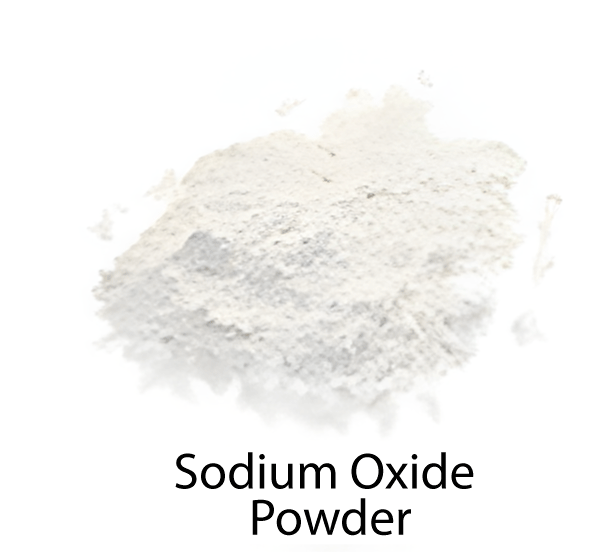 compounds. The metal is used in the alloying of tin, nickel and copper for its structural characteristics. Sodium compounds are also used in low tech applications throughout industry. Elemental or metallic forms of sodium include cubes, ingots, lumps, and sticks for evaporation source material purposes. Sodium oxide is available in powder and dense pellet forms for such uses as optical coating and thin film applications. Oxides tend to be insoluble. Sodium fluoride is another insoluble form for uses in which oxygen is undesirable such as metallurgy, chemical and physical vapor deposition and in some optical coatings. Sodium is available in soluble forms including chloride, nitrate, and acetates. These compounds are also manufactured as solutions at specified stoichiometries.
Sodium Properties
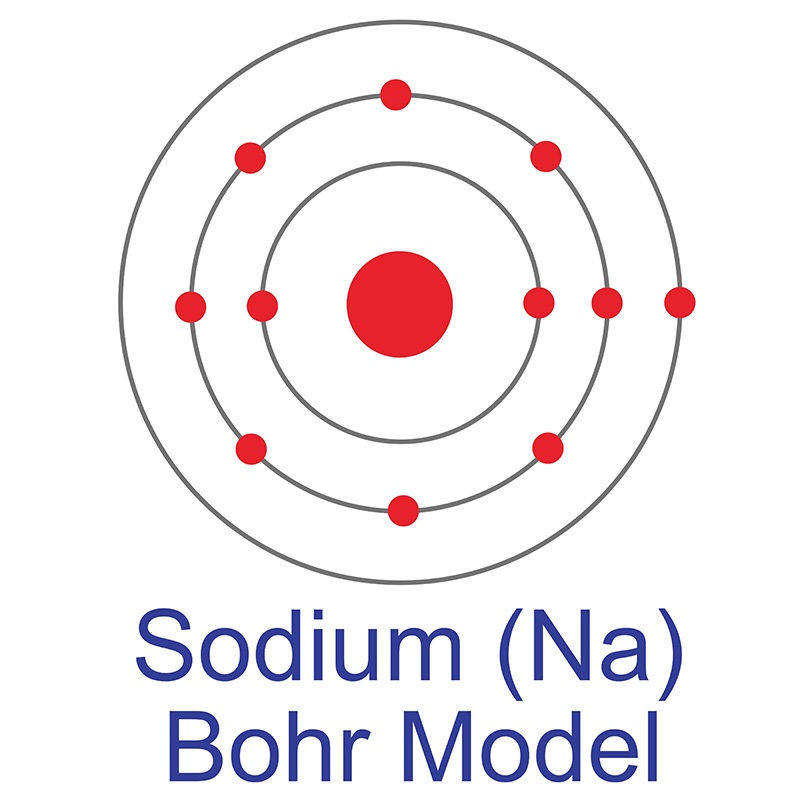
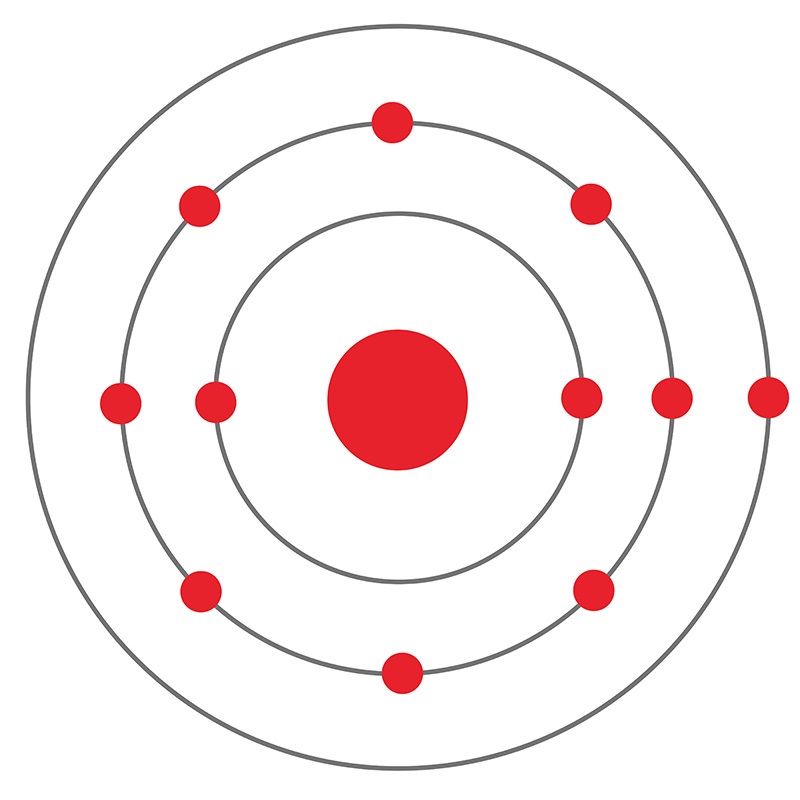
Sodium is a Block D, Group 5, Period 4 element. The number of electrons in each of Sodium's shells is 2, 8, 1 and its electron configuration is [Ne] 3s1. The sodium atom has a radius of 185.8.pm and its Van der Waals radius is 227 pm. In its elemental form, sodium has a silvery white metallic appearance. Sodium was first discovered by Sir Humphrey Davy in 1807. It is the sixth most abundant element making up 2.6 % of the earth's crust. Sodium does not occur in nature and must be extracted from its compounds. The name sodium comes from the Latin word "natrium" which means sodium carbonate. Sodium information, including technical data, safety data, high purity properties, research, applications and other useful facts are discussed below. Scientific facts such as the atomic structure, ionization energy, abundance on earth, conductivity and thermal properties are also included.
Health, Safety & Transportation Information for Sodium
Safety data for sodium and its compounds can vary widely depending on the form. For potential hazard information, toxicity, and road, sea and air transportation limitations, such as DOT Hazard Class, DOT Number, EU Number, NFPA Health rating and RTECS Class, please see the specific material or compound referenced in the Products tab. The below information applies to elemental (metallic) Sodium.
| Safety Data | |
|---|---|
| Signal Word | Danger |
| Hazard Statements | H260-H314 |
| Hazard Codes | F,C |
| Risk Codes | 14/15-34 |
| Safety Precautions | 26-36/37/39-43-45 |
| RTECS Number | N/A |
| Transport Information | UN 1428 4.3/PG 1 |
| WGK Germany | 2 |
| Globally Harmonized System of Classification and Labelling (GHS) |

 |
SECTION 1. IDENTIFICATION
Product Name: Sodium Metal
Product Number: All applicable American Elements product codes, e.g. NA-M-02, NA-M-03, NA-M-04, NA-M-05
CAS #: 7440-23-5
Relevant identified uses of the substance: Scientific research and development
Supplier details:
American Elements
1093 Broxton Ave. Suite 2000
Los Angeles, CA 90024
Tel: +1 310-208-0551
Fax: +1 310-208-0351
Emergency telephone number:
Domestic, North America +1 800-424-9300
International +1 703-527-3887
SECTION 2. HAZARDS IDENTIFICATION
Classification of the substance or mixture in accordance with 29 CFR 1910 (OSHA HCS)
GHS02 Flame
Water-react. 1 H260 In contact with water releases flammable gases which may ignite spontaneously.
GHS05 Corrosion
Skin Corr. 1B H314 Causes severe skin burns and eye damage.
Hazards not otherwise classified
No information known.
Label elements
GHS label elements
The product is classified and labeled in accordance with 29 CFR 1910 (OSHA HCS)
Hazard pictograms
 ,
,
GHS02 GHS05
Signal word
Danger
Hazard statements
H260 In contact with water releases flammable gases which may ignite spontaneously.
H314 Causes severe skin burns and eye damage.
Precautionary statements
P231+P232 Handle under inert gas. Protect from moisture.
P260 Do not breathe dust/fume/gas/mist/vapours/spray.
P303+P361+P353 If on skin (or hair): Take off immediately all contaminated clothing. Rinse skin with water/shower.
P305+P351+P338 IF IN EYES: Rinse cautiously with water for several minutes. Remove contact lenses, if present and easy to do. Continue rinsing.
P405 Store locked up.
P501 Dispose of contents/container in accordance with local/regional/
national/international regulations.
WHMIS classification
B6 - Reactive flammable material
D2B - Toxic material causing other toxic effects
E - Corrosive material
Classification system
HMIS ratings (scale 0-4)
(Hazardous Materials Identification System)
HEALTH
FIRE
REACTIVITY
3
3
3
Health (acute effects) = 3
Flammability = 3
Physical Hazard = 3
Other hazards
Results of PBT and vPvB assessment
PBT:
Not applicable.
vPvB:
Not applicable.
SECTION 3. COMPOSITION/INFORMATION ON INGREDIENTS
Chemical characterization: Substances
CAS# Description:
7440-23-5 Sodium
Identification number(s):
EC number:
231-132-9
Index number:
011-001-00-0
SECTION 4. FIRST AID MEASURES
Description of first aid measures
General information
Immediately remove any clothing soiled by the product.
After inhalation
Supply fresh air. If required, provide artificial respiration. Keep patient warm.
Seek immediate medical advice.
After skin contact
Immediately wash with water and soap and rinse thoroughly.
Seek immediate medical advice.
After eye contact
Rinse opened eye for several minutes under running water. Then consult a doctor.
After swallowing
Seek medical treatment.
Information for doctor
Most important symptoms and effects, both acute and delayed
Causes severe skin burns.
Causes serious eye damage.
Indication of any immediate medical attention and special treatment needed
No further relevant information available.
SECTION 5. FIREFIGHTING MEASURES
Extinguishing media
Suitable extinguishing agents
Special powder for metal fires. Do not use water.
For safety reasons unsuitable extinguishing agents
Water
Special hazards arising from the substance or mixture
Reacts violently with water
If this product is involved in a fire, the following can be released:
Sodium oxide
Advice for firefighters
Protective equipment:
Wear self-contained respirator.
Wear fully protective impervious suit.
SECTION 6. ACCIDENTAL RELEASE MEASURES
Personal precautions, protective equipment and emergency procedures
Wear protective equipment. Keep unprotected persons away.
Ensure adequate ventilation
Keep away from ignition sources
Environmental precautions:
Do not allow material to be released to the environment without proper governmental permits.
Methods and material for containment and cleaning up:
Keep away from ignition sources.
Use neutralizing agent.
Dispose of contaminated material as waste according to section 13.
Ensure adequate ventilation.
Do not flush with water or aqueous cleansing agents
Prevention of secondary hazards:
Keep away from ignition sources.
Reference to other sections
See Section 7 for information on safe handling
See Section 8 for information on personal protection equipment.
See Section 13 for disposal information.
SECTION 7. HANDLING AND STORAGE
Handling
Precautions for safe handling
Handle under dry protective gas.
Keep container tightly sealed.
Store in cool, dry place in tightly closed containers.
Ensure good ventilation at the workplace.
Information about protection against explosions and fires:
No information known.
Conditions for safe storage, including any incompatibilities
Storage
Requirements to be met by storerooms and receptacles:
No special requirements.
Information about storage in one common storage facility:
Store away from air.
Store away from water/moisture.
Do not store together with acids.
Store away from oxidizing agents.
Store away from halogens.
Store away from halocarbons.
Store away from alcohols.
Further information about storage conditions:
Store under dry inert gas.
This product is moisture sensitive.
This product is air sensitive.
Protect from humidity and water.
Keep container tightly sealed.
Store in cool, dry conditions in well sealed containers.
Specific end use(s)
No further relevant information available.
SECTION 8. EXPOSURE CONTROLS/PERSONAL PROTECTION
Additional information about design of technical systems:
Properly operating chemical fume hood designed for hazardous chemicals and having an average face velocity of at least 100 feet per minute.
Control parameters
Components with limit values that require monitoring at the workplace:
The product does not contain any relevant quantities of materials with critical values that have to be monitored at the workplace.
Additional information:
No data
Exposure controls
Personal protective equipment
General protective and hygienic measures
The usual precautionary measures for handling chemicals should be followed.
Keep away from foodstuffs, beverages and feed.
Remove all soiled and contaminated clothing immediately.
Wash hands before breaks and at the end of work.
Avoid contact with the eyes and skin.
Maintain an ergonomically appropriate working environment.
Breathing equipment:
Use suitable respirator when high concentrations are present.
Recommended filter device for short term use:
Use a respirator with type P100 (USA) or P3 (EN 143) cartridges as a backup to engineering controls. Risk assessment should be performed to determine if air-purifying respirators are appropriate. Only use equipment tested and approved under appropriate government standards.
Protection of hands:
Impervious gloves
Check protective gloves prior to each use for their proper condition.
The selection of suitable gloves not only depends on the material, but also on quality. Quality will vary from manufacturer to manufacturer.
Material of gloves
Nitrile rubber, NBR
Penetration time of glove material (in minutes)
Not determined
Eye protection:
Tightly sealed goggles
Full face protection
Body protection:
Protective work clothing
SECTION 9. PHYSICAL AND CHEMICAL PROPERTIES
Information on basic physical and chemical properties
General Information
Appearance:
Form: Solid in various forms
Color: Silver grey
Odor: Odorless
Odor threshold: Not determined.
pH-value: Not applicable.
Change in condition
Melting point/Melting range: 98 °C (208 °F)
Boiling point/Boiling range: 883 °C (1621 °F)
Sublimation temperature / start: Not determined
Flammability (solid, gaseous)
Contact with water liberates extremely flammable gases.
Ignition temperature: >115 °C (>239 °F)
Decomposition temperature: Not determined
Auto igniting: Not determined.
Danger of explosion: Not determined.
Explosion limits:
Lower: Not determined
Upper: Not determined
Vapor pressure at 400 °C (752 °F): 1.59 hPa (1 mm Hg)
Density at 20 °C (68 °F): 0.968 g/cm³ (8.078 lbs/gal)
Relative density
Not determined.
Vapor density
Not applicable.
Evaporation rate
Not applicable.
Solubility in / Miscibility with Water: Reacts violently
Contact with water releases flammable gases
Alcohols: Reacts
Partition coefficient (n-octanol/water): Not determined.
Viscosity:
dynamic: Not applicable.
kinematic: Not applicable.
Other information
No further relevant information available.
SECTION 10. STABILITY AND REACTIVITY
Reactivity
Reacts violently with water.In contact with water releases flammable gases which may ignite spontaneously.
Chemical stability
Stable under recommended storage conditions.
Thermal decomposition / conditions to be avoided:
Decomposition will not occur if used and stored according to specifications.
Possibility of hazardous reactions
Reacts with strong oxidizing agents
Contact with water releases flammable gases
Reacts violently with water
Conditions to avoid
No further relevant information available.
Incompatible materials:
Acids
Air
Oxidizing agents
Halogens
Halocarbons
Alcohols
Water/moisture
Hazardous decomposition products:
Sodium oxide
SECTION 11. TOXICOLOGICAL INFORMATION
Information on toxicological effects
Acute toxicity:
Swallowing will lead to a strong corrosive effect on mouth and throat and to the danger of perforation of esophagus and stomach.
The Registry of Toxic Effects of Chemical Substances (RTECS) contains acute toxicity data for this substance.
LD/LC50 values that are relevant for classification:
No data
Skin irritation or corrosion:
Causes severe skin burns.
Eye irritation or corrosion:
Causes serious eye damage.
Sensitization:
No sensitizing effects known.
Germ cell mutagenicity:
No effects known.
Carcinogenicity:
No classification data on carcinogenic properties of this material is available from the EPA, IARC, NTP, OSHA or ACGIH.
Reproductive toxicity:
No effects known.
Specific target organ system toxicity - repeated exposure:
No effects known.
Specific target organ system toxicity - single exposure:
No effects known.
Aspiration hazard:
No effects known.
Subacute to chronic toxicity:
The Registry of Toxic Effects of Chemical Substances (RTECS) contains multiple dose toxicity data for this substance.
Additional toxicological information:
To the best of our knowledge the acute and chronic toxicity of this substance is not fully known.
SECTION 12. ECOLOGICAL INFORMATION
Toxicity
Aquatic toxicity:
No further relevant information available.
Persistence and degradability
No further relevant information available.
Bioaccumulative potential
No further relevant information available.
Mobility in soil
No further relevant information available.
Additional ecological information:
General notes:
Do not allow material to be released to the environment without proper governmental permits.
Avoid transfer into the environment.
Results of PBT and vPvB assessment
PBT:
Not applicable.
vPvB:
Not applicable.
Other adverse effects
No further relevant information available.
SECTION 13. DISPOSAL CONSIDERATIONS
Waste treatment methods
Recommendation
Consult state, local or national regulations to ensure proper disposal.
Uncleaned packagings:
Recommendation:
Disposal must be made according to official regulations.
SECTION 14. TRANSPORT INFORMATION
UN-Number
DOT, IMDG, IATA
UN1428
UN proper shipping name
DOT
Sodium
IMDG, IATA
SODIUM
Transport hazard class(es)
DOT
Class
4.3 Substances which, in contact with water, emit flammable gases.
Label
4.3
Class
4.3 (W2) Substances which, in contact with water, emit flammable gases
Label
4.3
IMDG, IATA
Class
4.3 Substances which, in contact with water, emit flammable gases.
Label
4.3
Packing group
DOT, IMDG, IATA
I
Environmental hazards:
Not applicable.
Special precautions for user
Warning: Substances which, in contact with water, emit flammable gases
EMS Number: F-G,S-N
Transport in bulk according to Annex II of MARPOL73/78 and the IBC Code
Not applicable.
Transport/Additional information:
DOT
Marine Pollutant (DOT):
No
UN "Model Regulation":
UN1428, Sodium, 4.3, l
SECTION 15. REGULATORY INFORMATION
Safety, health and environmental regulations/legislation specific for the substance or mixture
GHS label elements
The product is classified and labeled in accordance with 29 CFR 1910 (OSHA HCS)
Hazard pictograms
GHS02
GHS05
Signal word
Danger
Hazard statements
H260 In contact with water releases flammable gases which may ignite spontaneously.
H314 Causes severe skin burns and eye damage.
Precautionary statements
P231+P232 Handle under inert gas. Protect from moisture.
P260 Do not breathe dust/fume/gas/mist/vapours/spray.
P303+P361+P353 If on skin (or hair): Take off immediately all contaminated clothing. Rinse skin with water/shower.
P305+P351+P338 IF IN EYES: Rinse cautiously with water for several minutes. Remove contact lenses, if present and easy to do. Continue rinsing.
P405 Store locked up.
P501 Dispose of contents/container in accordance with local/regional/
national/international regulations.
National regulations
All components of this product are listed in the U.S. Environmental Protection Agency Toxic Substances Control Act Chemical substance Inventory.
All components of this product are listed on the Canadian Domestic Substances List (DSL).
SARA Section 313 (specific toxic chemical listings)
7440-23-5 Sodium
California Proposition 65
Prop 65 - Chemicals known to cause cancer
Substance is not listed.
Prop 65 - Developmental toxicity
Substance is not listed.
Prop 65 - Developmental toxicity, female
Substance is not listed.
Prop 65 - Developmental toxicity, male
Substance is not listed.
Information about limitation of use:
For use only by technically qualified individuals.
Other regulations, limitations and prohibitive regulations
Substance of Very High Concern (SVHC) according to the REACH Regulations (EC) No. 1907/2006.
Substance is not listed.
The conditions of restrictions according to Article 67 and Annex XVII of the Regulation (EC) No 1907/2006 (REACH) for the manufacturing, placing on the market and use must be observed.
Substance is not listed.
Annex XIV of the REACH Regulations (requiring Authorisation for use)
Substance is not listed.
Chemical safety assessment:
A Chemical Safety Assessment has not been carried out.
16. OTHER INFORMATION
Safety Data Sheet according to Regulation (EC) No. 1907/2006 (REACH). The above information is believed to be correct but does not purport to be all inclusive and shall be used only as a guide. The information in this document is based on the present state of our knowledge and is applicable to the product with regard to appropriate safety precautions. It does not represent any guarantee of the properties of the product. American Elements shall not be held liable for any damage resulting from handling or from contact with the above product. See reverse side of invoice or packing slip for additional terms and conditions of sale. COPYRIGHT 1997-2016 AMERICAN ELEMENTS. LICENSED GRANTED TO MAKE UNLIMITED PAPER COPIES FOR INTERNAL USE ONLY.
Sodium Isotopes
Sodium (Na) has 20 isotopes ranging from 18Na to 37Na. Only 23Na is stable.
| Nuclide | Isotopic Mass | Half-Life | Mode of Decay | Nuclear Spin | Magnetic Moment | Binding Energy (MeV) | Natural Abundance (% by atom) |
|---|---|---|---|---|---|---|---|
| 18Na | 18.02597(5) | 1.3(4)E-21 s | p to 17Ne; ß+ to 18Ne | (1-)# | N/A | 109.78 | - |
| 19Na | 19.013877(13) | <40 ns | p to 18Ne | (5/2+)# | N/A | 129.04 | - |
| 20Na | 20.007351(7) | 447.9(23) ms | ß+ to 20Ne; ß+ + a to 16O | 2+ | N/A | 142.71 | - |
| 21Na | 20.9976552(8) | 22.49(4) s | EC to 21Ne | 3/2+ | N/A | 160.11 | - |
| 22Na | 21.9944364(4) | 2.6027(10) yr | EC to 22Ne | 3+ | 1.746 | 170.98 | - |
| 23Na | 22.9897692809(29) | STABLE | - | 3/2+ | 2.21752 | 183.72 | 100 |
| 24Na | 23.99096278(8) | 14.9590(12) h | ß- to 24Mg | 4+ | 1.69 | 190.86 | - |
| 25Na | 24.9899540(13) | 59.1(6) s | ß- to 25Mg | 5/2+ | 3.683 | 199.87 | - |
| 26Na | 25.992633(6) | 1.077(5) s | ß- to 26Mg | 3+ | 2.851 | 205.16 | - |
| 27Na | 26.994077(4) | 301(6) ms | ß- to 27Mg; ß- + n to 26Mg | 5/2+ | N/A | 211.37 | - |
| 28Na | 27.998938(14) | 30.5(4) ms | ß- to 28Mg; ß- + n to 27Mg | 1+ | N/A | 215.72 | - |
| 29Na | 29.002861(14) | 44.9(12) ms | ß- to 29Mg; ß- + n to 28Mg | 3/2(+#) | N/A | 220.08 | - |
| 30Na | 30.008976(27) | 48.4(17) ms | ß- to 30Mg; ß- + n to 29Mg; ß- + 2n to 28Mg; ß- + a to 26Ne | 2+ | N/A | 222.57 | - |
| 31Na | 31.01359(23) | 17.0(4) ms | ß- to 31Mg; ß- + n to 30Mg; ß- + 2n to 29Mg; ß- + 3n to 28Mg | (3/2+) | N/A | 225.99 | - |
| 32Na | 32.02047(38) | 12.9(7) ms | ß- to 32Mg; ß- + n to 31Mg; ß- + 2n to 30Mg | (3-,4-) | N/A | 227.54 | - |
| 33Na | 33.02672(94) | 8.2(2) ms | ß- + n to 32Mg; ß- to 33Mg; ß- + 2n to 31Mg | 3/2+# | N/A | 230.03 | - |
| 34Na | 34.03517(96)# | 5.5(10) ms | ß- + 2n to 32Mg; ß- to 34Mg; ß- + n to 33Mg | 1+ | N/A | 229.73 | - |
| 35Na | 35.04249(102)# | 1.5(5) ms | ß- to 35Mg; ß- + n to 34Mg | 3/2+# | N/A | 231.28 | - |
| 36Na | 36.05148(102)# | <260 ns | Unknown | N/A | N/A | 230.98 | - |
| 37Na | 37.05934(103)# | 1# ms [>1.5 µs] | Unknown | 3/2+# | N/A | 231.6 | - |